


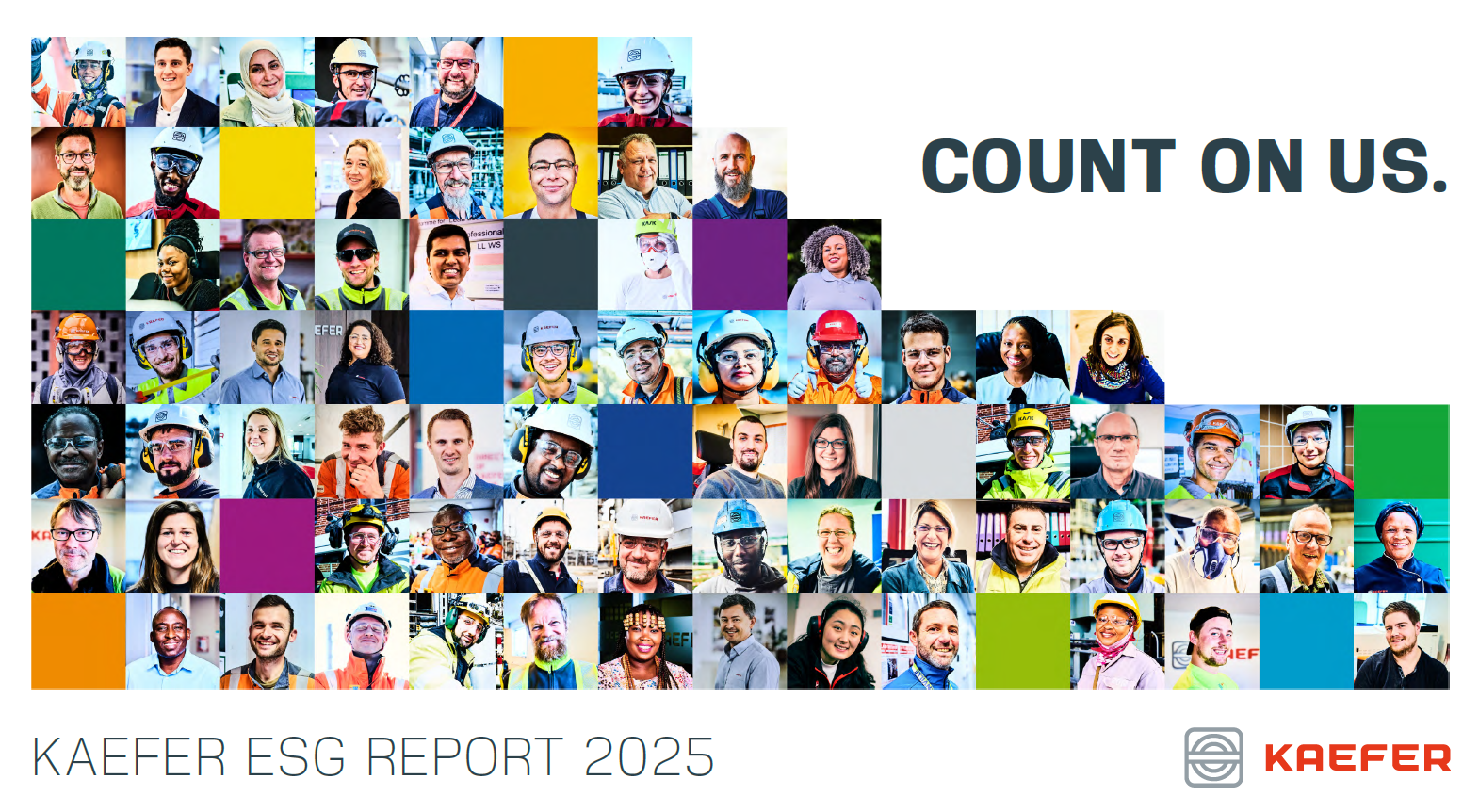
For most people, an ESG Report only becomes visible once it is finished: a polished document filled with charts, KPIs, targets and carefully crafted statements.
What usually remains hidden is everything behind it.
The discussions around regulations and reporting standards. The coordination of input and data collection across countries, departments and functions. The challenge of transforming thousands of data points into one clear and meaningful story. And above all: the people who spend months making sure every detail comes together.
Because no ESG Report is created overnight.
At KAEFER, the ESG Report is the result of almost a year of collaboration across the globe. It reflects not only numbers and compliance requirements, but also how sustainability is embedded into the company’s daily business.
As the report itself states:
“Climate protection at KAEFER is a two-fold mission. As a group, we have embedded ESG into our daily operations to reach our ambitious Science-Based Targets and manage sustainability risks across our entire value chain.”
Behind every chart, KPI and carefully worded paragraph are discussions, coordination, problem-solving and people from across the world working towards one common goal.
To better understand what really goes into creating such a report, we spoke with Julia, Merrit and Erhard from the Corporate Strategy & ESG department who are responsible for coordinating KAEFER’s sustainability reporting.

From “nice to have” to strategic priority
When KAEFER first started its sustainability reporting journey back in 2011/2012, the approach looked very different from today. Back then, sustainability reporting was far less regulated and often seen primarily as a communication or image topic.

Over the years, expectations changed significantly – not only from customers and business partners, but also from regulators, financial institutions and society as a whole. Today, sustainability is closely linked to risk management, financial reporting and long-term business resilience. Companies are increasingly expected not only to act responsibly, but also to transparently demonstrate and document those actions.
And that is exactly where the ESG Report comes in.
What is important to understand: the report itself is not the sustainability work. None of this happens because a report requires it. It happens because it is part of how KAEFER operates. The report brings it together, structures it, and holds it to account.
Many of these topics, from health and safety to training, compliance or supplier collaboration, have long been part of daily business operations. In the past, however, they were often not categorised under “ESG” and did not need to be disclosed in such a structured and transparent way.
Today, the report gives these activities an additional stage and makes them visible.

At the same time, many of the underlying processes are not directly managed by the ESG team itself. They are embedded in different functions, departments and regions across the organisation – and ultimately reflected in the report through close collaboration and coordination.
A process that lasts almost a year
Creating the ESG Report is therefore far more than simply writing a document. Every new reporting cycle begins by reviewing feedback from the previous year and analysing changes in regulations, reporting standards and organisational structures. From there, teams across the KAEFER Group prepare for one of the largest parts of the process: collecting, validating and consolidating data from entities worldwide. Environmental, social and governance data must be gathered, checked and aligned, while texts, layouts, charts and visual concepts are developed in parallel.

The ESG team acts as a central coordinator throughout this process – aligning information, supporting departments with reporting requirements and translating highly complex content into a structured and accessible report. Before publication, some figures and KPIs additionally undergo external audits to ensure both accuracy and compliance.

A truly global collaboration
One thing quickly becomes clear when speaking to the team: ESG reporting is impossible without collaboration. Because sustainability impacts every part of the business, the report depends on contributions from colleagues, departments and functions across the globe.

There are workshops, reporting calls, discussions around interpretation of standards and continuous alignment between countries, departments and functions.

And while the process can be highly technical at times, the human aspect remains essential. In fact, some of the team’s favourite moments happen during creative workshops and milestone meetings.


Strong foundations
Over the years, KAEFER has built a strong foundation for sustainability reporting and ESG management.

The growing maturity of the process is also visible in daily business operations.
Today, the ESG Report helps answer requests from customers, banks and other stakeholders on topics ranging from emissions to health and safety performance.

More than a document
For the ESG team, the final report is more than a compliance exercise or a corporate publication.
It is the result of months of collaboration, coordination and continuous improvement across the entire organisation.
A document that combines data and stories, regulations and real-life impact – while making visible the many sustainability-related activities that happen across KAEFER every single day.
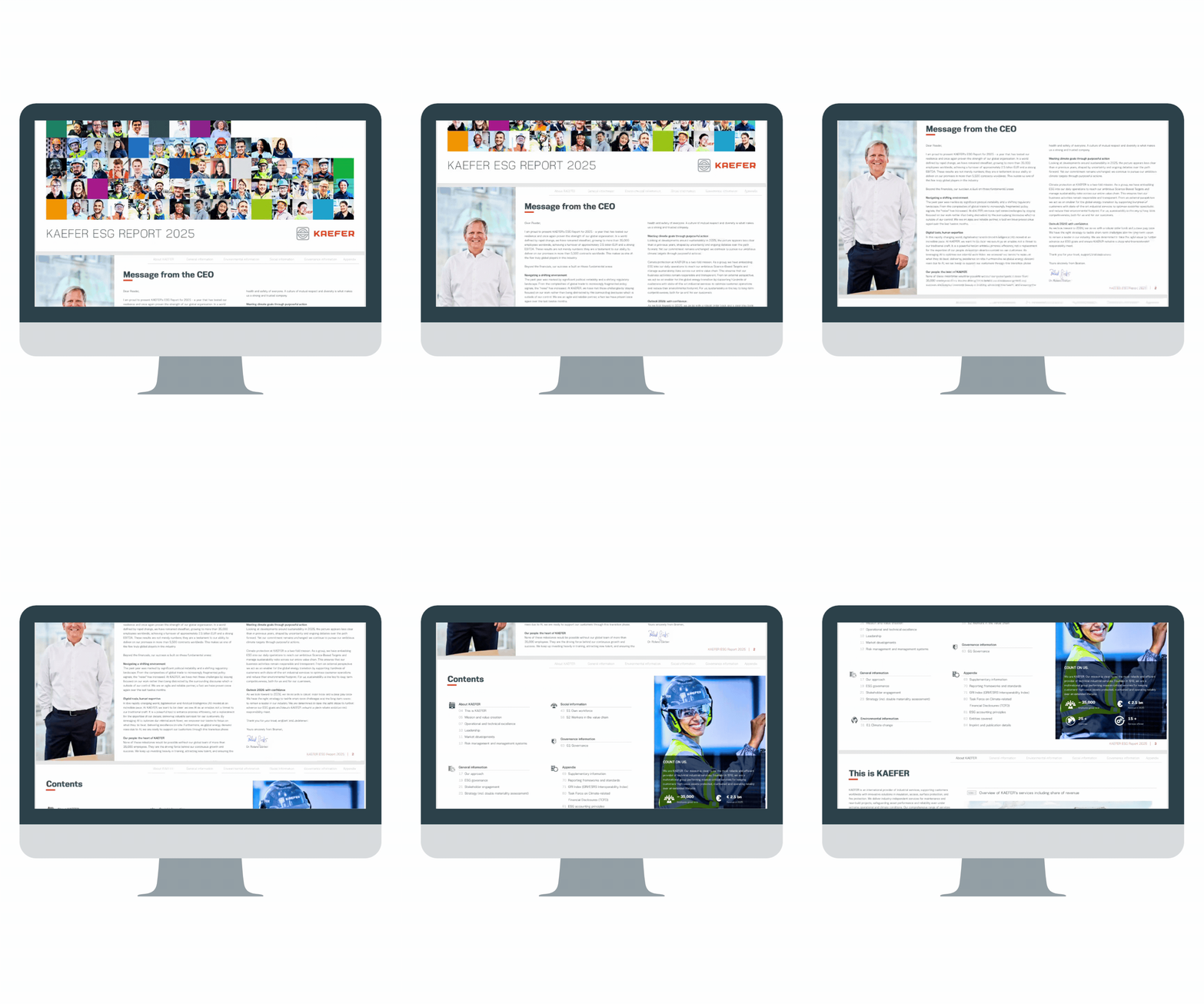
So now that you know just how much work goes into a single report, do have a look at the recently published KAEFER ESG Report 2025.
Note: Written by humans – with a little help from GenAI. This article combines human understanding and intelligent digital tools to bring KAEFER stories to life.